July 31, 2025 | Uncategorized
Real Estate Market Update

The early 2026 real estate market across Winchester, Lexington, and Arlington—covering January through mid-March—showed a mix of shifting trends compared to the same period in 2025. Winchester experienced a surge in activity with sales up nearly 79%, while average prices moderated, reflecting a wider range of homes entering the market. Arlington saw fewer transactions, down 50%, but continued to see strong price growth, highlighting sustained demand for well-positioned properties. Lexington’s market was more measured, with sales and average prices both declining, yet top-quality homes sold faster and at higher price per square foot. Across the tri-town corridor, these variations underscore how inventory levels, buyer preferences, and property type continue to shape local dynamics, offering a nuanced view of the evolving Boston-area market.
Winchester
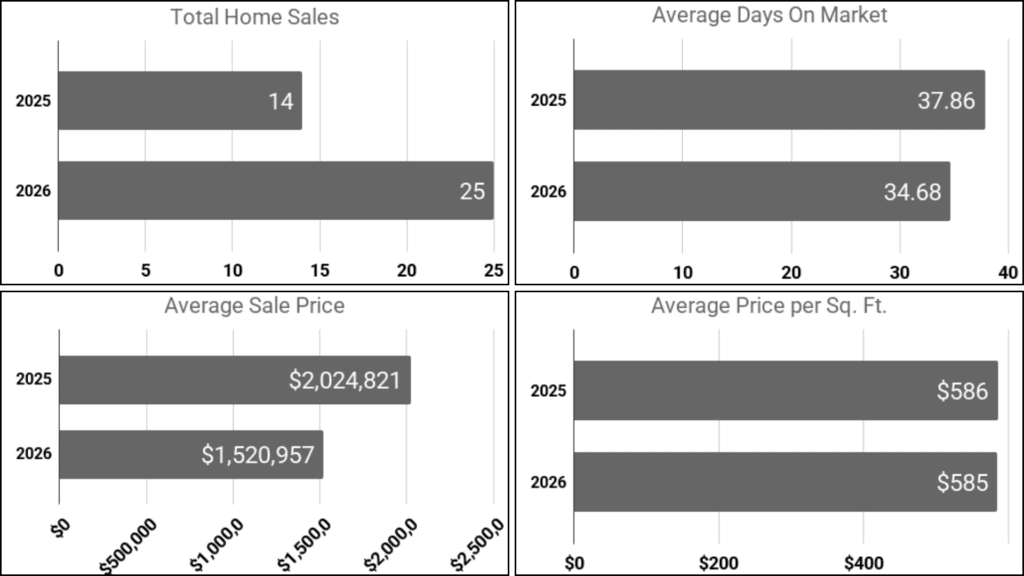
Winchester’s market from January through mid-March 2026 showed a notable surge in activity paired with a shift in pricing dynamics compared to 2025. Sales volume jumped nearly 79%, signaling a meaningful increase in available inventory and buyer engagement. At the same time, average sale prices declined by about 25%, while price per square foot remained essentially flat. This suggests a change in the mix of homes sold—potentially more mid-range inventory entering the market—rather than a broad drop in home values. With days on market decreasing by over 8%, homes are still moving efficiently, reinforcing that demand remains strong even as the market becomes more balanced and accessible across a wider range of price points.
Lexington
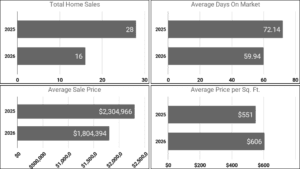
Lexington’s market from January through mid-March 2026 reflects a shift toward a more measured, efficiency-driven environment compared to 2025. Sales volume declined by nearly 43%, and average sale prices softened by about 22%, indicating a change in the mix of homes sold and potential recalibration at the upper end of the market. At the same time, price per square foot rose nearly 10% and days on market decreased by close to 17%, suggesting that well-priced, move-in-ready homes continued to attract strong interest and sell more quickly. Overall, the data points to a market where buyers are discerning, but high-quality properties are still commanding competitive attention.
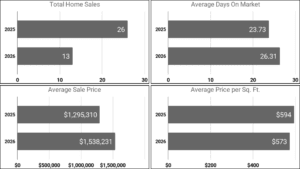
Arlington’s market from January through mid-March 2026 tells a story of quality over quantity compared to the same period in 2025. While total sales were down 50%, average sale prices climbed nearly 19%, signaling that well-positioned homes continued to command strong premiums. At the same time, a slight dip in price per square foot and a modest increase in days on market suggest buyers were more selective and deliberate in their decisions. Overall, the data reflects a competitive environment where demand remains steady, but pacing has normalized and outcomes are increasingly driven by property-specific factors.
In summary, the January through mid-March 2026 real estate market across Winchester, Lexington, and Arlington displayed distinct shifts within each community. Winchester saw a significant increase in sales activity—up nearly 79%—though average prices softened, indicating more mid-range homes entering the market. Arlington experienced a 50% drop in sales but posted nearly 19% higher average prices, reflecting continued strong demand for well-positioned homes. Lexington saw both sales and average prices decline, yet price per square foot rose and days on market fell, showing that top-quality homes continued to sell efficiently. Together, these trends highlight the tri-town corridor’s ongoing appeal: buyers remain active, discerning, and responsive to property quality, even as each local market adjusts. Looking ahead, these communities are positioned to sustain solid fundamentals, offering opportunities for both homeowners and investors seeking stability and long-term growth.